

Leading with Wisdom of the Heart
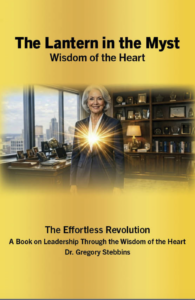 The Lantern in the Myst: Wisdom of the Heart reframes Philautia as a leadership discipline, connecting inner alignment to sharper decisions, healthier cultures, and lasting performance.
What if the biggest lever in your leadership toolkit isn’t a new strategy, a tighter KPI, or a louder call for urgency, but you? That’s the provocative question at the heart of Dr. Gregory Stebbins’ new book, The Lantern in the Myst: Wisdom of the Heart, which reintroduces an ancient Greek concept—Philautia, or unconditional self-love—as a serious, practical foundation for modern business leadership.
It’s a bold move. Leadership circles have long dismissed self-love as soft at best, self-indulgent at worst. Stebbins pushes back on that assumption directly, drawing a hard line between Philautia and its imposters, narcissism and hubris. His central premise: the internal condition of a leader doesn’t stay internal. It radiates outward, shaping the organization in ways most leaders never stop to examine.
Real Leaders, Real Lessons
Rather than staying in the abstract, Stebbins grounds his framework in the stories of leaders who put it into practice:
- Bob Chapman and his conviction that everyone matters
- Doug Conant, who built a legacy on the simple, radical act of writing personal notes to employees
- Satya Nadella, whose emphasis on humility replacing a rigid “know-it-all” mindset and stack-ranking system with a collaborative growth mindset for Microsoft’s culture
- Ed Catmull, whose insights reveal how organizational security fuels creativity
- Alan Mulally, whose humane leadership steered Ford through one of its most consequential eras
For contrast, Stebbins also examines what happens when narcissism and hubris take the wheel instead, showing, side by side, how care and integrity build organizations up while ego quietly tears them down.
Where Values and Behavior Collide
The book’s driving idea is simple but sharp. Whatever is happening inside a leader—clarity or confusion, integrity or compromise—gets amplified as it moves through the organization.
That’s why Stebbins zeroes in on friction points: the moments where stated values and actual behavior quietly diverge. When a leader tolerates the very condition they claim to oppose. Where expectations are announced but never enforced. These aren’t minor inconsistencies, Stebbins argues: they’re expensive ones, chipping away at trust, clarity, and performance long before anyone notices the damage.
An Alternative to “Just Push Harder”
For executives, entrepreneurs, managers, coaches, and anyone serious about leadership development, The Lantern in the Myst offers a genuine alternative to the standard playbook of more intensity, tighter targets, and greater urgency. Stebbins’ warning is blunt: acceleration without alignment doesn’t create speed; it creates instability.
His framework flips the usual order of operations. Alignment comes first. Acceleration follows. And the payoff, he argues, is tangible: reduced cognitive burden, clearer executive functioning, stronger decisions, more stable teams, and faster execution; not despite the internal work, but because of it.
About the Author
Dr. Gregory Stebbins is the author of The Lantern in the Myst: Wisdom of the Heart, bringing the ancient concept of Philautia into a strikingly contemporary conversation about organizational leadership. Using real corporate examples alongside pointed questions designed to expose the gap between values and behavior, Stebbins challenges leaders to scrutinize themselves with the same rigor they apply to strategy, performance, and operations.
His message is clear: wisdom of the heart isn’t a substitute for accountability or business discipline; it’s a multiplier. In Stebbins’ framework, alignment comes before acceleration, and the leader’s condition becomes part of the organization’s capacity to perform.
The book is available now — secure your copy here: https://www.amazon.com/dp/B0H7SZS1Q1
